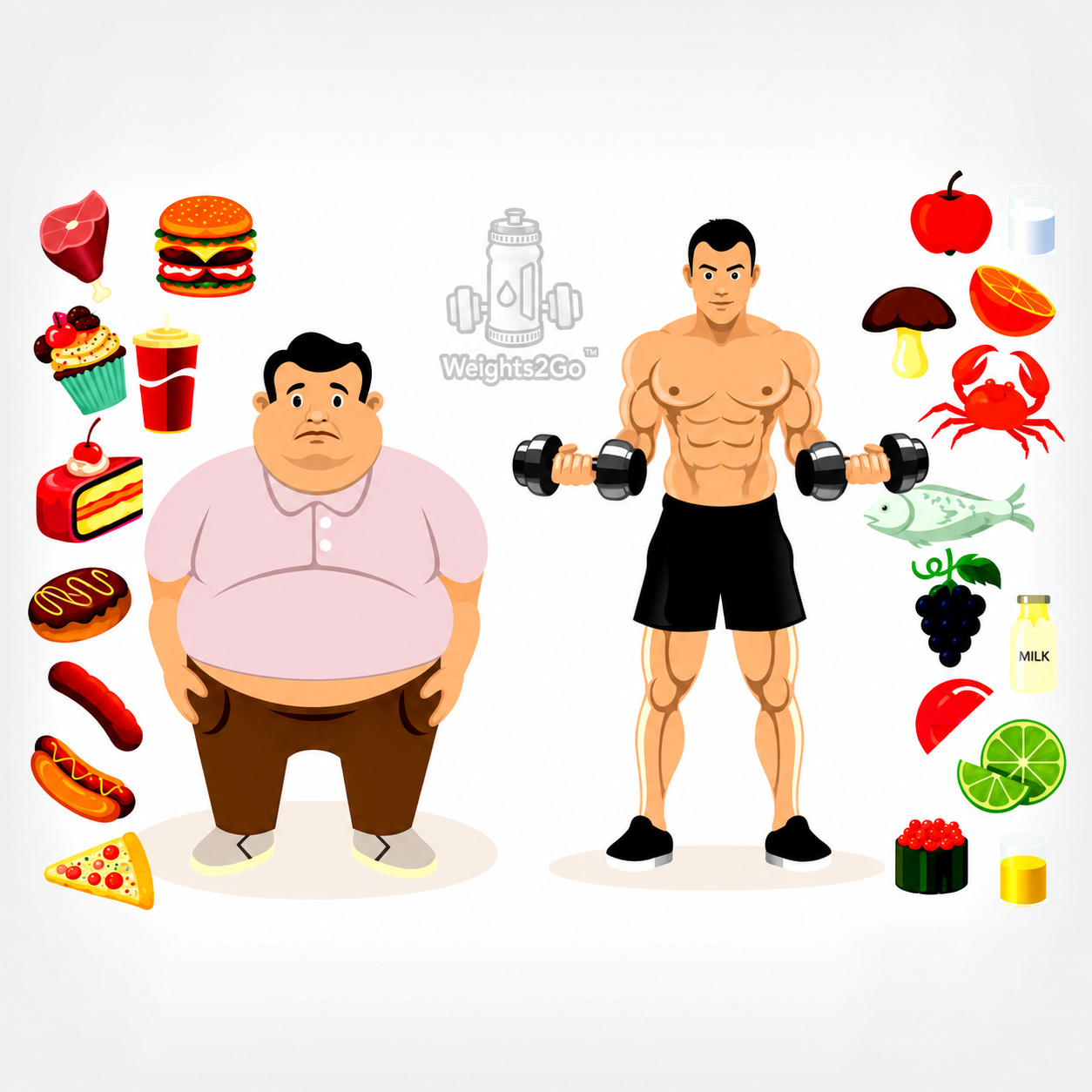
Hey, do you look down towards your feet, and, see some of your tummy getting in the way? Or, maybe your 6-pack is looking a little more like a 2-pack these days (or even, a keg)?
Fear not – we’ve got you covered!
Having a bulging belly, or, a little belly bump, isn’t always something we’re happy about.
So, make way Bulging Belly, because here comes Tight Torso!
Before we get down to the nitty gritty of how we can reduce excess body fat, there is something important to understand; it’s not possible, unfortunately, to lose weight in a specific area of our bodies. Generally, weight comes off different areas of our body, and, we can’t plan where we lose the fat from.
Why Do We Gain Fat Around Our Belly/Tummy?
There isn’t just one reason why we gain weight around our stomach. As we get older, our body composition, and where we store fat, can change. Genetics, hormones, diet, physical activity, sleep, stress, certain medications, and, some medical conditions, can all play a role.
Obviously, by consuming more energy than our body needs, over time, can contribute to weight gain; but it isn’t quite as simple as saying, ‘Eat less and exercise more.’
Our bodies are much more complicated than that, and, if you experience rapid, unexplained, or unusual abdominal swelling or weight gain, don’t automatically assume that it is body fat, see your healthcare provider to check your health. There can be medical reasons for a swollen or enlarged abdomen, including digestive conditions and certain hormonal or metabolic disorders.
For example, conditions such as coeliac disease, inflammatory bowel disease, and, polycystic ovary syndrome (PCOS, which is now called PMOS, polyendocrine metabolic ovarian syndrome) as well as, thyroid disorders, can all cause symptoms that may affect weight gain, bloating, or, a larger abdominal appearance.
A swollen abdomen can also be caused by temporary digestive issues, constipation, fluid retention, or other conditions. If something doesn’t seem right, or, the change is sudden or persistent, please speak to your doctor.
Subcutaneous Fat vs Visceral Fat
Do you know that, there are different types of fat around our abdomen? The fat that sits directly underneath our skin is called subcutaneous adipose tissue. This is the soft, pinchable fat that most of us can see and feel.
Then, there is visceral fat. Visceral fat is stored deeper inside the abdominal cavity, around our internal organs. This is the type of fat that we particularly want to keep an eye on.
Higher levels of visceral fat are associated with an increased risk of several metabolic and cardiovascular problems.
A large systematic review and dose-response meta-analysis involving more than 2.5 million people found that measures of central fatness, including waist circumference and waist-to-height ratio, were positively associated with all-cause mortality, even after accounting for overall body size.
Another systematic review specifically examining abdominal visceral adipose tissue found that higher visceral fat was associated with increased mortality risk in several cohorts, although the association became less clear after accounting for factors such as BMI and glucose-related measures.
So, this isn’t simply about how we look in the mirror. Where we store fat can also matter for our health.
Can We Lose Belly Fat? Yes! However, unfortunately, there isn’t a magic exercise that tells our body: “Hey, let’s burn the fat from the tummy today!” We can’t choose exactly where our body loses fat.
Doing hundreds of sit-ups may strengthen your abdominal muscles, but it won’t necessarily cause the fat sitting on top of those muscles to disappear.
To reduce abdominal fat, we generally need to reduce overall body fat; and this usually involves a combination of eating habits, physical activity, sleep, and, long-term consistency.
The good news? It is possible! You don’t need to starve yourself or spend hours exercising every day.
Here Are Some Helpful Ways to Reduce Body Fat
1. Eat a Healthy, Balanced Diet
When I say “diet”, I mean the food that you eat, and not, a short-term, restrictive way of eating, which is regularly referred to as being on a ‘diet.’
Try to base your everyday meals around minimally processed foods, and, try to eat natural whole foods, such as:
- Vegetables
- Fruit
- Lean meats
- Fish
- Eggs
- Beans
- Lentils
- Whole grains
- Nuts and seeds
- Dairy, if you tolerate it
You don’t have to completely eliminate carbohydrates, fats, or, any particular food group. Instead, think about the overall quality and quantity of your diet.
As silly as it sounds, remember that even healthy foods contain calories; so, portion sizes still matter!
2. Prioritise Protein
Protein is important when we’re trying to lose body fat, particularly because maintaining muscle while losing weight is important. Protein can also help us to feel fuller, and, for longer.
A meta-analysis of 24 randomised controlled trials found that higher-protein diets during energy restriction produced modest improvements in weight loss and fat mass, while helping to preserve fat-free mass.
Good sources include:
- Chicken and turkey
- Fish
- Eggs
- Lean meat
- Greek yoghurt and other dairy foods
- Beans
- Lentils
- Nuts and seeds
- Other protein-rich foods
You don’t have to eat huge amounts of protein. Just make sure that you’re getting enough as part of a balanced diet.
3. How much Protein should I eat each day?
Here are the Daily Protein Targets by Goal
- Sedentary adults: 0.8 to 1.2 g/kg (0.36 to 0.55 g/lb) to support basic health.
- Active fitness / Light exercise: 1.2 to 1.6 g/kg (0.55 to 0.73 g/lb) for recovery and general upkeep.
- Building muscle / Strength training: 1.6 to 2.2 g/kg (0.73 to 1.0 g/lb) to maximize lean mass gains.
- Weight loss: 1.6 to 2.4 g/kg (0.73 to 1.1 g/lb) to protect muscle while cutting calories.
- Older adults (40+): 1.2 to 1.6 g/kg to help prevent age-related muscle
These are guidelines only, for specific detailed information, please talk with your healthcare provider.
4. Be Mindful of Portion Sizes
Even when you’re eating healthy foods, it is possible to eat more energy than your body needs, and this can result in weight gain.
You could try using a slightly smaller plate, measuring portions for a while, or, simply paying more attention to how much you’re putting on your plate.
If you’re comfortably full, you don’t have to finish everything; instead save it in the fridge for another time.
I remember when I was growing up, I was constantly told to finish what was on my plate, and, it became habit for many years. Sometimes, I would catch myself saying the same thing to my daughters. I’m happy to say that I now tell them, “If you’re full, leave it.” It gets saved for later, or given to our dogs, or, it’s thrown in the bin – which is better than adding an extra Pound to a person’s waistline! It has taken me many years to kick that habit, of feeling that I should always finish the food on my plate.
As simple as it sounds, when you put food onto your plate, go for less than you think you’ll actually eat, knowing that you can have more if you’re still hungry. Often, you won’t feel hungry, and, you’ve saved yourself from eating additional calories, that you didn’t need.
5. Watch the Liquid Calories
This is a big one, because it’s very easy to forget what we’ve had to drink during the day. Sugary drinks can be surprisingly easy to consume without feeling particularly full. Soft drinks, sweetened coffees, energy drinks, and some alcoholic drinks, can all contribute calories without necessarily making us feel as satisfied.
Water is a great everyday choice, and of course, when you’re exercising, don’t forget to take your water with you!
This is one of the reasons why I designed Weights2Go Weighted Sports Bottles; so, you can carry your hydration with you, while also incorporating light resistance into your workout.
6. What About Alcohol?
Alcohol contains calories, but there is more to the story than simply calling them ‘empty calories.’ Alcohol can contribute to overall energy intake, and, drinking patterns, can also influence food choices and eating behaviour. I find this especially true for me; if I drink a glass of wine, I find myself reaching for the cookie jar.
Research into alcohol and abdominal obesity is complex, and, the relationship can vary according to how much alcohol is consumed, drinking patterns, sex, age, and other lifestyle factors.
So, rather than saying that everyone must completely avoid alcohol, I’d say: If you’re trying to lose body fat, reducing your alcohol intake may be helpful.
Of course, drinking less alcohol has plenty of potential health benefits beyond your waistline. We’ll discuss this another time. Join us here on the Weights2Go Community page.
7. What About Intermittent Fasting & Time-Restricted Eating?
You may have heard of Intermittent Fasting (IF) or Time-Restricted Eating (TRE); perhaps you’ve read our article about these types of Fasting.
These approaches can be useful for some people because they provide a structure around when you eat.; but Fasting isn’t magic.
Recent research suggests that Time-Restricted Eating can produce modest reductions in body weight and fat mass, but the results vary between studies.
When Time-Restricted Eating is compared directly with calorie restriction, the evidence doesn’t consistently show that adding a restricted eating window produces additional benefits. A 2024 systematic review found that, most of the studies it examined, did not find significant additional benefits from adding TRE to calorie restriction. For more information, take a look at my article on Intermittent Fasting & Time-Restricted Eating. It’s a lifestyle that I have followed for the last several years, and it works for me, but everyone is different.
8. Exercise Regularly
Exercise is another important part of the equation. Try to include a mixture of Cardio and Strength-training.
Walking, jogging, running, cycling, swimming, hiking, and other cardiovascular activities, can help to increase your energy expenditure, and improve cardiovascular fitness. Strength-training is just as important as cardio, because it can help you to build, and maintain, muscle. Combining these two types of activity, gives you a great all-round workout. The sweet spot: Pairing 150 minutes of weekly cardio with your twice-weekly strength sessions fulfills recommendations from the American Heart Association and the Mayo Clinic for long-term health and longevity.
This is where Weights2Go Weighted Sports Bottles can be useful too. When using our weighted sports bottles, the pair give you some resistance training, all while being able to easily hydrate. It’s a 2 for 1! It’s a simple way of combining hydration with resistance exercise.
9. Don’t Forget Your Abdominal Muscles!
Although abdominal exercises won’t specifically burn belly fat, that doesn’t mean that you shouldn’t train your core.
Exercises such as:
- Planks
- Side planks
- Dead bugs
- Bird dogs
- Squats
- Lunges
- Loaded carries
The exercises above, can all be useful ways of training your core and surrounding muscles. As you lose overall body fat, your stronger abdominal muscles may become more visible. So, don’t get caught up in the idea, that you need hundreds of crunches every day to achieve a ‘flat stomach.’
A strong core is much more important than having a perfect-looking stomach.
10. Get Enough Sleep
Sleep is often forgotten about when we’re talking about weight loss, but it does matter, quite a lot, actually.
I know, that if I have a really late night, or disruptive sleep, the next day, my willpower is limited.
Most adults generally need around 7 to 9 hours of quality sleep each night, although individual needs vary.
Research has found an association between short sleep and obesity risk, and, more recent research has also found, an association between shorter sleep duration and central or abdominal obesity.
That doesn’t mean that getting eight hours of sleep will automatically make your belly fat disappear! – wouldn’t that be nice! However, by consistently getting too little sleep, may make managing your weight, more difficult.
Let’s face it, it’s generally much easier, to make sensible food choices when we’re rested, rather than feeling exhausted, which often makes us reach for the nearest sugary snack!
If you struggle with sleep regularly, it’s worth talking to your doctor.
11. Try to Manage Stress
Stress is another factor that can influence our eating habits and overall health. We know, and also appreciate that, reducing stress isn’t always easy!
Work, family, finances, relationships, and, everyday life can all contribute to stress.
So, don’t beat yourself up because you’re stressed! Instead, try to find things that can help you to relax. Go for a walk. Spend some time outdoors. Read a book. Listen to music. Practice meditation. Exercise. Talk to a friend. Or, simply take some time for yourself.
12. Don’t Become Obsessed with the Scales
This is an important one. If weighing yourself regularly is helpful, and doesn’t cause you stress, then it’s absolutely fine. However, if stepping onto the scales every morning, makes you miserable, then, don’t do it!
Your body weight can naturally fluctuate from day to day because of water, food in your digestive system, hormones, sodium intake, and, many other factors.
Also, if you’re exercising and gaining muscle, while losing fat, the scales may not tell you the whole story. Pay attention to how your clothes fit. Take measurements if you find it helpful.
Look at your strength and fitness. Notice how you feel.
If you do decide to weigh yourself regularly, look at the trend over time, rather than becoming fixated on one day’s number. Keep a weight diary, to track progress on an app on your phone; this can also provide a little motivation.
13. Remember Your “Why”
Why do you want to lose weight? Is it because you want to feel healthier? Move more comfortably? Improve your fitness? Reduce a health risk? Feel more confident? To fit into your favourite clothes? Or, perhaps you simply want to feel better in yourself?
Whatever your reason, remember it, because believe me when I say, there will inevitably be days when you don’t feel motivated. I kept a small book near the scales, and when I decided to weigh myself, I wrote my weight down, along with the date.
Remember, life often gets in the way of best intentions, and you don’t have to hide away because there’s a birthday celebration, or Christmas, around the corner. Just remember your ‘Why,’ and be kind to yourself. Taste the treats that you want to eat, but just a tiny piece, and, when the next day arrives, and you don’t feel defeated, you can be proud of yourself for using willpower and motivation!
One treat or meal, isn’t going to undo months of healthy habits.
Don’t let one bad day turn into a bad week. Don’t give up.
14. Can Losing Belly Fat Improve Your Health?
Yes. Excess central or abdominal fat is associated with an increased risk of a number of health problems, including cardiovascular disease and metabolic conditions.
Large-scale research has found associations between greater waist circumference and increased mortality risk, even after accounting for BMI.
However, I don’t want you to read this and immediately start worrying about the size of your tummy; because, your waist measurement is only one piece of information.
Health is much more complicated than a number on a tape measure.
Your blood pressure, cholesterol, blood glucose, fitness, diet, activity levels, sleep, family history, and, many other factors all contribute to your overall health.
Remember, you don’t need to have a perfectly flat stomach to be healthy!
15. Bulging Belly or Tight Torso? If you would like to reduce excess body fat, don’t look for a quick fix, because unfortunately, there isn’t one. Instead, concentrate on the basics, such as:
Eat well. Hydrate. Move more. Strength-train. Get enough sleep. Manage stress where & when you can. Drink sensibly. Be consistent. And, give yourself time.
Weight loss really is a journey; it’s a Marathon, not a Sprint!
You won’t necessarily see changes overnight, but, small changes made consistently, can add up.
And, remember…You don’t have to be perfect. If you have a bad day, start again tomorrow.
If you miss a workout, do the next one. If you eat too much at dinner, don’t decide that you’ve ruined everything.
Just carry on. Most importantly, don’t focus solely on having a “Tight Torso”.
Focus on becoming stronger, fitter, healthier, and, happier.
That’s what really matters.
Research & Further Reading
Central Fatness and Risk of All-Cause Mortality: Systematic Review and Dose-Response Meta-Analysis of 72 Prospective Cohort Studies
A very large systematic review involving more than 2.5 million participants found positive associations between several measures of central adiposity, including waist circumference and waist-to-height ratio, and all-cause mortality.
A Pooled Analysis of Waist Circumference and Mortality in 650,000 Adults
This large pooled analysis found associations between greater waist circumference and mortality risk across a broad range of BMI values.
Abdominal Visceral Adipose Tissue and All-Cause Mortality: A Systematic Review
This review examined research specifically investigating visceral abdominal fat and mortality, highlighting the complex relationship between visceral fat and overall health.
Effects of Energy-Restricted High-Protein, Low-Fat Compared With Standard-Protein, Low-Fat Diets: A Meta-Analysis of Randomized Controlled Trials
A meta-analysis of 24 trials found modest benefits from higher-protein diets during energy restriction, including reductions in body weight and fat mass and better preservation of fat-free mass.
Systematic Review and Meta-Analysis of Randomized Clinical Trials Comparing Time-Restricted Eating With and Without Caloric Restriction for Weight Loss
A recent 2026 review of 30 trials found that Time-Restricted Eating can produce reductions in body weight and fat mass, although the size of the effect was modest and the results varied depending on the comparison group.
Does Time-Restricted Eating Add Benefits to Calorie Restriction? A Systematic Review
This 2024 review found that most studies did not demonstrate significant additional benefits from adding Time-Restricted Eating to calorie restriction, highlighting why TRE should be viewed as one possible approach rather than a requirement for weight loss.
Short Sleep Duration Is Associated With Higher Risk of Central Obesity in Adults: A Systematic Review and Meta-Analysis of Prospective Cohort Studies
This 2024 systematic review found that shorter sleep duration was significantly associated with abdominal obesity in adults.
Disclaimer
The information provided in this article, and on this website, is for general educational and informational purposes only. It is not intended to replace medical advice, diagnosis, or treatment from a qualified healthcare professional.
If you experience rapid or unexplained weight loss or weight gain, persistent abdominal swelling or bloating, significant changes in your bowel habits, abdominal pain, or any other symptoms that concern you, please speak to your doctor.
If you are new to exercise, have an existing medical condition, or are taking medication, or are unsure whether a particular exercise, or weight-loss approach, is suitable for you, speak to your doctor or another appropriately qualified healthcare professional, before starting or changing your diet or exercise programme.
Research is continually evolving, and, individual responses to diet, exercise, sleep, and weight loss can vary considerably.