What does ‘physical health’ actually mean?
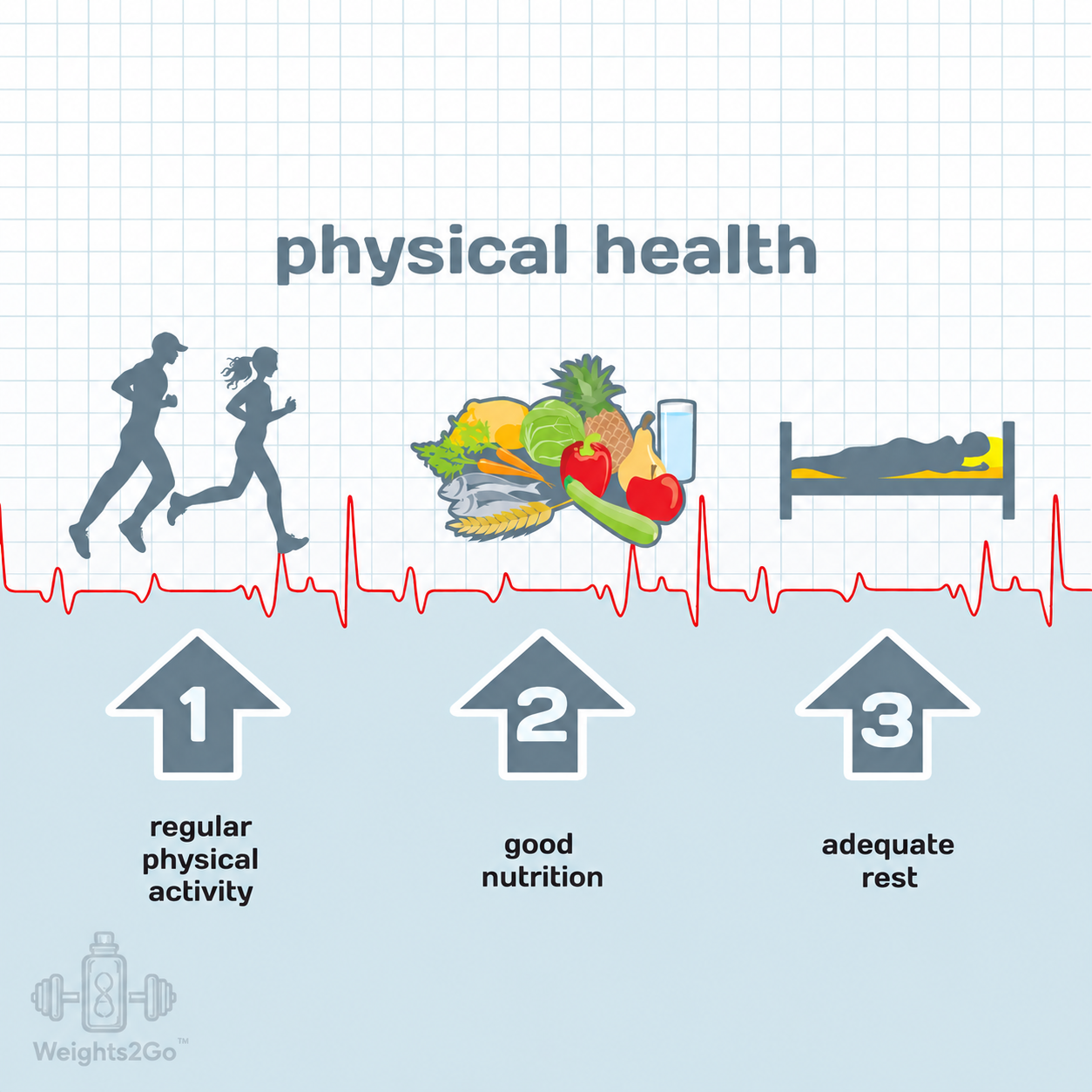
In plain English, physical health means how well your body is functioning, and, how capable you are of doing the things that you need to do, as well as, doing the things that you love.
It isn’t simply about being a certain weight, looking fit, or having visible muscles. Physical health involves the condition and functioning, of many parts of your body, including your:
- ❤️ heart and cardiovascular system
- 🫁 lungs and respiratory system
- 💪 muscles and strength
- 🦴 bones and joints
- 🧠 nervous system
- ⚡ energy and physical stamina
- 🛡️ positive ability to cope with illness and recover
As we all know, science is extensive. Physical health, is actually a very broad concept, and physical functioning, is one component of it.
So, why is physical health important – What are the benefits:
Physical health means that you can move comfortably, perform everyday activities, maintain physical independence as you age, and, it means being able to participate in the activities that you enjoy. In a nutshell, it means having good physical health, which helps everyone to function well in everyday life, but this is my plain-English version; for studies, please read below.
For example, having good physical health can help you:
🚶 Move more easily – walking, climbing stairs, bending, lifting and carrying.
💪 Maintain strength and muscle function – particularly important as we get older.
❤️ Support heart and lung health – regular physical activity can improve cardiovascular fitness.
🦴 Maintain strong bones and healthy movement – physical activity and resistance exercise can support the musculoskeletal system.
⚡ Have greater physical capacity – helping you to do more, without becoming so easily exhausted.
🧓 Maintain independence as you age – strength, balance, mobility and fitness can all contribute to us being able to complete everyday activities and chores for ourselves.
😊 Support overall wellbeing – physical activity is also associated with benefits for mood, sleep and mental wellbeing.
Here at Weights2Go,we believe that physical health isn’t about being perfect, or, being a certain size, nor is it about looking a particular way; it’s about keeping your body strong, capable and healthy enough to help you to enjoy everyday life — today, and, as you get older.
Physical health is broader than physical fitness. Fitness is one component of physical health; and, physical health encompasses the overall functioning, and wellbeing, of the body.
It’s not something you do a few weeks before you visit the beach, it takes time to achieve, but it can diminish in just a few weeks, if we’re not mindful, and make the effort.
Physical Health is an ongoing journey, one that we have to follow for as long as we’re able. What can happen relatively quickly is that fitness, strength, conditioning and some physiological adaptations begin to decline when training stops.
Good physical health matters to everyone; and it helps us to stay capable, independent and able to enjoy everyday life, both now, and as we age.
Research & Further Reading:
1. Physical activity, cardiovascular health, cancer and mortality
Non-occupational physical activity and risk of cardiovascular disease, cancer and mortality outcomes: a dose-response meta-analysis of large prospective studies (2023)
This study included 196 articles covering 94 cohorts and more than 30 million participants. It examined associations between physical activity, and outcomes, including cardiovascular disease, cancer, and, all-cause mortality.
PubMed – Non-occupational physical activity and risk of cardiovascular disease, cancer and mortality
2. Strength, walking and physical function in older adults
This review included 24 studies and 3,656 participants aged 63–83. Resistance training improved walking distance, lower-extremity strength and usual gait speed. The authors concluded that these improvements could contribute to greater independence in activities of daily living.
Role of Resistance Training in Mitigating Risk for Mobility Disability in Community-Dwelling Older Adults: A Systematic Review and Meta-analysis (2022)
This review included 24 studies and 3,656 participants aged 63–83. Resistance training improved walking distance, lower-extremity strength and usual gait speed. The authors concluded that these improvements could contribute, to greater independence, in activities of daily living.
PubMed – Resistance Training and Mobility Disability
3. Resistance training and functional capacity
Machine-Based Resistance Training Improves Functional Capacity in Older Adults: A Systematic Review and Meta-Analysis (2024)
This review included 17 studies, with 614 participants in the functional-outcome analysis. Resistance training produced significant improvements in functional outcomes as well as strengths.
PubMed – Machine-Based Resistance Training and Functional Capacity
4. Resistance training, muscle strength and bone density
Progressive Resistance Training for Concomitant Increases in Muscle Strength and Bone Mineral Density in Older Adults: A Systematic Review and Meta-Analysis (2022)
This study found that progressive resistance training increased muscle strength and femur/hip bone mineral density in older adults. The researchers also noted that the evidence was stronger for improvements in strength than for bone density.
PubMed – Progressive Resistance Training, Muscle Strength and Bone Density
5. Physical activity and overall mortality/health outcomes
Associations Between Exercise Training, Physical Activity, Sedentary Behaviour and Mortality: An Umbrella Review of Meta-Analyses (2025)
This is a very interesting higher-level piece of evidence because it is an umbrella review; and, essentially a review of existing meta-analyses.
It included 48 meta-analyses and found suggestive evidence linking physical activity with lower risks of all-cause, cardiovascular and cancer mortality, while sedentary behaviour showed the opposite pattern.
PubMed – Exercise, Physical Activity, Sedentary Behaviour and Mortality
6. Physical activity/exercise and mental wellbeing
A Systematic Review and Meta-Analysis of Resistance Training on Quality of Life, Depression, Muscle Strength, and Functional Exercise Capacity in Older Adults Aged 60 Years or More (2023)
This review included 21 studies involving 1,610 older adults. Resistance training significantly improved physical functioning, mental health, general health and several quality-of-life measures, and, it was also associated with improvements in depression.
PubMed – Resistance Training, Quality of Life, Depression and Functional Capacity
Disclaimer: The information provided is for general educational purposes only and is not intended to replace professional medical or healthcare advice. Before making changes to your diet, exercise or fitness routine, please consult a qualified healthcare professional to ensure they are appropriate for you.