Do you enjoy exercising outside? I certainly do!
Whether you enjoy walking, jogging, running, cycling, hiking, or another outdoor activity, getting outside can be a fantastic way to exercise and enjoy some fresh air.
Before you head out, there are a few things worth considering. Outdoor exercise can involve changing weather conditions, uneven or slippery surfaces, traffic, poor visibility, heat, cold, and, depending on what you’re doing, an increased risk of falls, and other injuries.
Being prepared doesn’t have to be complicated. A little planning beforehand can make your outdoor exercise safer, more comfortable, and much more enjoyable.
Here are some simple tips to help you to prepare.
Tips
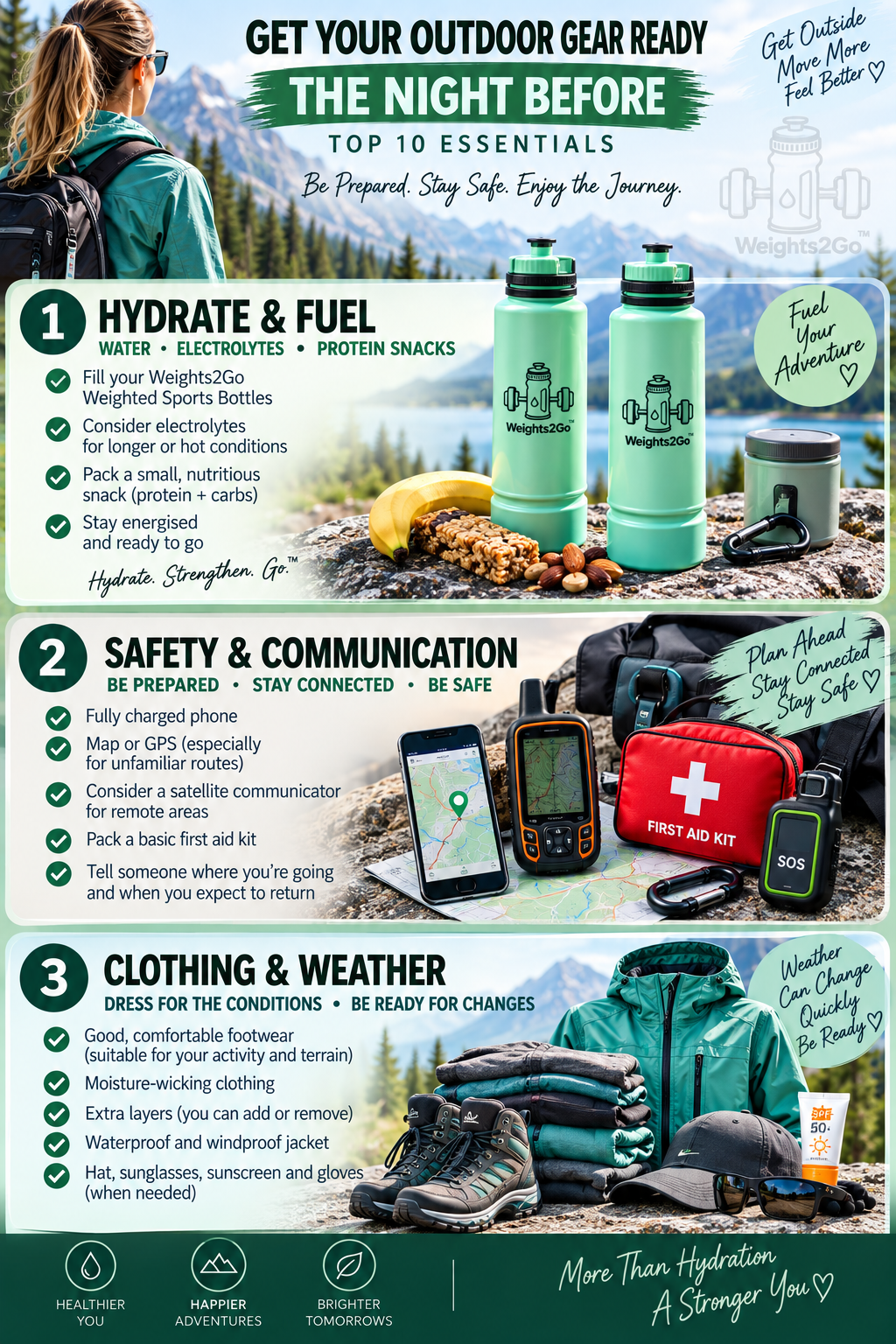
Hydrate & Fuel
Hydration is important during exercise, particularly during longer or more intense sessions and in hot weather. However, there isn’t one amount of fluid that is right for everyone. How much you need can depend on your activity, the weather, how much you sweat, and your individual needs.
For shorter or less intense exercise, plain water is usually sufficient. During longer sessions, particularly in hot conditions or when you’re sweating heavily, electrolytes may sometimes be useful.
Weights2Go Weighted Sports Bottles allow you to carry your hydration with you, while the added weight can also provide resistance exercise as you move.
If you’re going to be exercising for a longer period, consider taking a small snack containing some protein and carbohydrates to help maintain your energy levels.
Also, don’t forget to hydrate after exercise too. You may need to replace some of the fluid you’ve lost through sweating, particularly after a long workout in hot weather.
Safety & Communication
Before you leave, tell someone where you’re going and approximately when you expect to return.
Take your phone with you and make sure the battery is fully charged. If you’re exercising somewhere remote, a satellite communicator can be a very sensible piece of safety equipment, particularly where mobile phone coverage may be limited.
A map and GPS tech, can also be useful, especially if you’re going somewhere unfamiliar. Some people might consider a map a little old-fashioned, but I think it can still provide some peace of mind!
Also, don’t forget a basic first aid kit, especially, if you’re going somewhere, where help may not be immediately available.
Most importantly, when you arrive home, remember to tell the same person that you’re back safely. They won’t then be left wondering where you are or worrying that something may have happened to you.
Clothing & Weather
Wear comfortable clothing that is appropriate for both your activity and the weather.
In warmer conditions, breathable fabrics that wick sweat away from your skin can help you feel more comfortable. In colder weather, layering allows you to add or remove clothing as your body temperature changes.
If you’re exercising near roads or in low-light conditions, consider wearing bright or reflective clothing so you’re easier to see.
Don’t forget the basics, these being, comfortable footwear, a hat, sunglasses, sunscreen, gloves when needed, and extra layers.
Weather can change surprisingly quickly, particularly in the mountains, but a sudden change in weather can affect outdoor exercise anywhere.
I’ve experienced this myself on a hike in the Rockies. When we started, it was warm with sunshine, and by the end of the day, it was cold, cloudy, and, snowing!
For this reason, I think a lightweight, windproof and waterproof jacket is worth carrying whatever the season.
Warm Up & Cool Down
Don’t jump straight into full exertion. Give your body a chance to gradually warm up and prepare for the activity you’re about to do.
A warm-up can be as simple as some gentle movements, gradually increasing your intensity, or a short walk before you start exercising properly.
When you’ve finished, gradually reduce the intensity rather than stopping suddenly. A gentle walk after running, for example, can be a simple way to finish your workout.
If you enjoy stretching, this can also be a good time to include some relaxed stretching.
Stretching isn’t compulsory; although, I think this is very much a personal choice.
Be Aware of Your Surroundings
Outdoor surfaces aren’t always predictable. Loose rocks, mud, roots, uneven ground, ice and steep sections can all make exercising outside more challenging.
Take your time when necessary and watch where you’re stepping. It’s surprisingly easy to trip when you’re looking at the scenery rather than the ground!
Also be mindful of wildlife and other people using the same space. If you’re exercising near roads, cyclists or traffic, make sure you can hear what’s happening around you.
If you wear headphones, keep the volume low enough that you can still hear your surroundings.
Personally, I don’t listen to music when I’m hiking, but I do often, when I’m walking. I now use wireless bone-conduction headphones, which allow me to remain more aware of what’s happening around me.
Check the Conditions
Before you head outside, have a quick look at the weather and air quality, particularly if you’re planning a long or intense workout.
Very hot or cold temperatures can affect how comfortable you feel while exercising. Poor air quality, traffic pollution, or wildfire smoke can also be a concern because we breathe more deeply during exercise.
This doesn’t mean you need to stop exercising outside. Far from it!
If conditions aren’t ideal, consider choosing a quieter road, park or trail away from heavy traffic or smoke, or changing your plans.
Very recently, I went on a challenging hike up a very steep mountain, with lots of uneven, muddy ground, loose stones and rocks. The hike leader knew rain was forecast, but the hike wasn’t cancelled. In places, the trail became very narrow, with steep drops, and the conditions made it feel treacherous. I completed the hike, but I have to admit, I didn’t enjoy it. To me, it felt too slippery and dangerous given the weather and trail conditions. We even encountered a bear along the way! Thankfully, we managed to frighten it off with lots of very loud singing!
Get Your Gear Ready the Night Before
If you’re planning an early start or a longer outdoor adventure, I find that making a list of everything I need the night before helps me get organised much more quickly.
Put your phone, water, snacks, appropriate clothing, footwear and safety equipment where you can easily find them.
Check that your phone is charged, your footwear is in good condition, and that you have any additional equipment you may need, such as your GPS, heart-rate monitor, satellite communicator and definitely, your first aid kit.
Being prepared the night before means you’re less likely to forget something when you’re rushing out the door in the morning!
Change Your Routine
If you exercise regularly, try not to do exactly the same workout, at exactly the same intensity, every day.
Changing your activities can provide variety and allows different muscles and tissues to experience different types of loading.
Of course, simply changing activities doesn’t guarantee that you’ll avoid injuries. Training load, technique, previous injuries, strength, recovery and individual circumstances can all play a role.
Use Technology If You Find It Motivating
Technology can be a great motivational tool.
Apps and fitness devices can track things such as distance, time, pace, route, heart rate and exercise duration. I personally find being able to look back at what I’ve achieved really motivating.
Just remember that some measurements, such as estimated calories burnt, aren’t precise. And if you’re using an app to monitor your progress, keeping your information reasonably up to date makes the information more useful.
A heart-rate monitor can also help you see how hard your cardiovascular system is working, but don’t rely on it alone. Heart rate can be affected by many things, including temperature, hydration, stress, caffeine, sleep and other individual factors.
Most Importantly — Enjoy Yourself!
If you’re new to outdoor exercise, or you’re getting back into exercise after a break, don’t try to do everything at once.
Start slowly and build your fitness gradually. Give your body time to adapt and build your endurance over months, rather than days.
And most importantly, enjoy yourself!
Exercise shouldn’t feel like a chore. If you enjoy what you’re doing, you’re much more likely to keep doing it.
For me, getting outside isn’t just about exercise. It’s about enjoying the fresh air, seeing new places, clearing my head, and feeling good about what I’ve achieved.
So, get your gear ready, head outside, and enjoy your exercise!
Join the conversation — we’d love to chat!